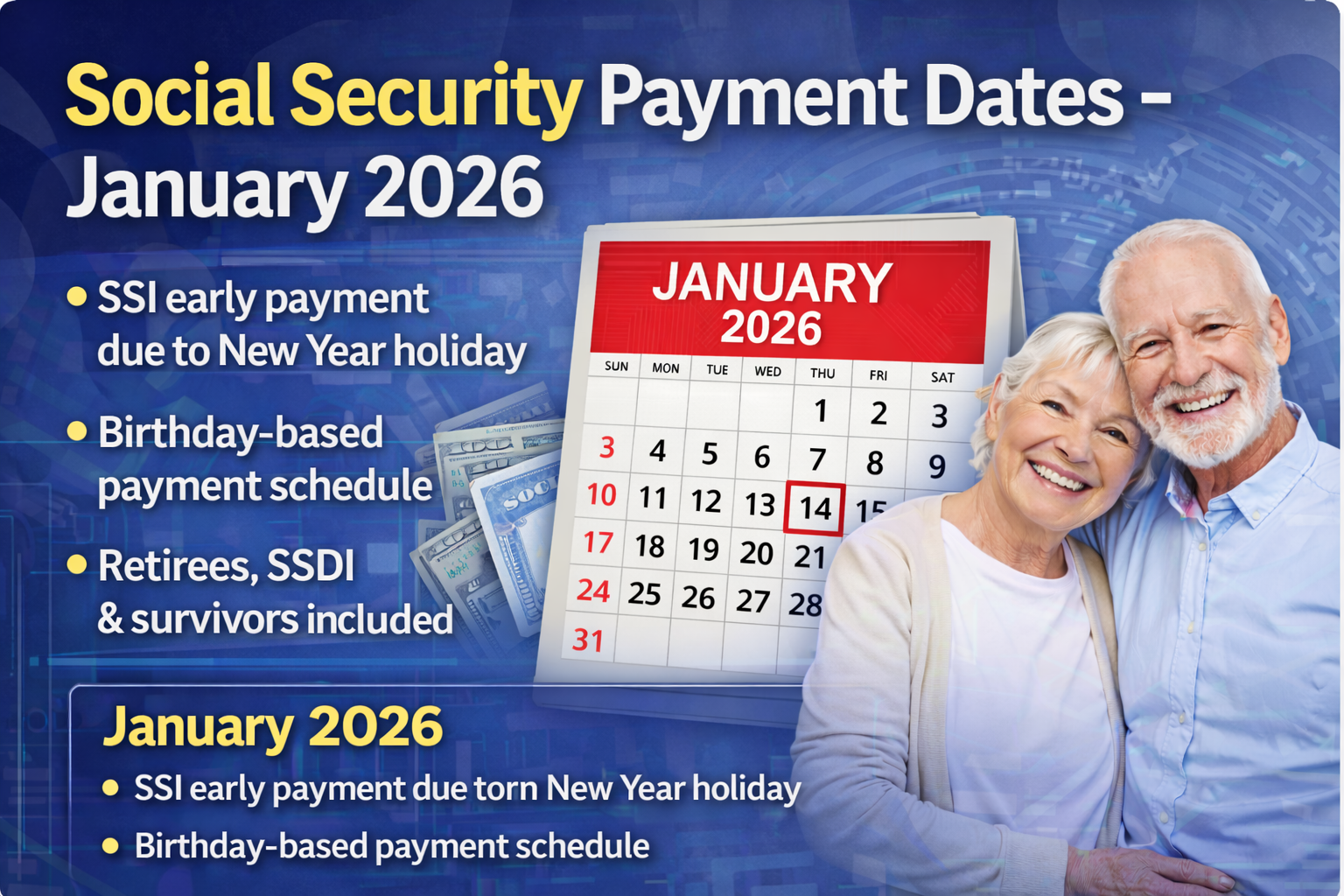
Social Security Payment Schedule for January 2026 — Who Gets Paid and When
As the New Year begins, millions of Americans who rely on Social Security benefits are looking ahead to their first 2026 payments. The Social Security Administration (SSA) follows a set schedule each month to distribute benefits, and January’s calendar has a few notable details retirees and other beneficiaries should know.
Because of holidays and the way dates fall on the calendar this year, some Social Security and Supplemental Security Income (SSI) payments are scheduled slightly differently than usual.
How Social Security Payments Are Scheduled
Most Social Security retirement, disability, and survivor benefits are distributed based on a beneficiary’s date of birth. The SSA uses a system that spreads payments across the month to help manage cash flow and ensure beneficiaries receive steady income.
Generally, payments are scheduled on Wednesdays, grouped by birthday ranges.
For January 2026, the payment schedule looks like this:
-
January 14, 2026: Payments are issued for beneficiaries whose birthdays fall between the 1st and the 10th of any month.
-
January 21, 2026: Beneficiaries born between the 11th and the 20th will receive their checks.
-
January 28, 2026: Those with birthdays between the 21st and the 31st get their benefits.
This sunrise payment cycle applies to most retirees, people receiving disability benefits, and survivors who collect Social Security.
Special Rules in January 2026
January’s calendar has some unique quirks:
✔ Supplemental Security Income (SSI) Payments
SSI — a program that provides monthly benefits to people with limited income who are elderly, blind or disabled — has its own payment schedule. Normally SSI comes out on the first of each month. But because January 1, 2026, is a federal holiday (New Year’s Day), the payment for SSI beneficiaries was issued on December 31, 2025, so recipients would not have to wait through the holiday weekend to get their funds. Recent months have seen similar early payments because of holiday schedules.
✔ Combined Benefits or Pre-1997 Payments
Some long-time beneficiaries who started receiving benefits before May 1997, or those who receive both SSI and Social Security retirement or disability, may see their Social Security checks issued on the 3rd of the month. Because January 3, 2026, falls on a weekend, these payments are typically processed on the business day before — meaning January 2, 2026.
How Payments Are Delivered
Most recipients get their Social Security benefits through direct deposit, which sends funds straight into a bank account or onto a government-issued payment card. This system is faster and safer than paper checks, and it helps beneficiaries access funds promptly on the scheduled dates.
If your payment doesn’t appear in your account exactly on the listed date, it’s usually advised to wait a few extra business days, especially if you receive paper checks or if weekends and holidays affect processing times.
Why the Schedule Matters
Knowing the payment dates helps beneficiaries plan for rent or mortgage payments, utilities, groceries and healthcare expenses. January’s staggered schedule ensures that everyone is paid in a predictable way based on their birth date, and that no one goes too long without a payment.
It also reflects how the SSA manages the large volume of monthly payments the system handles — more than 70 million Social Security beneficiaries nationwide.
Summary — January 2026 Social Security Payment Dates
-
Dec 31, 2025: SSI beneficiaries received their first 2026 payment early due to New Year’s Day holiday.
-
Jan 2, 2026: Some long-time Social Security recipients get their checks.
-
Jan 14, 2026: Payments for birthdays from 1st to 10th.
-
Jan 21, 2026: Payments for birthdays from 11th to 20th.
-
Jan 28, 2026: Payments for birthdays from 21st to 31st.
Practical Tips for Beneficiaries
-
Check your bank account on or after your payment date.
-
Use direct deposit if possible — it’s the fastest method to receive benefits.
-
Understand which schedule applies to you — SSI, combined benefits, or regular Social Security.
-
Plan around holidays — early payments like the December SSI deposit help avoid gaps.











Leave a Comment