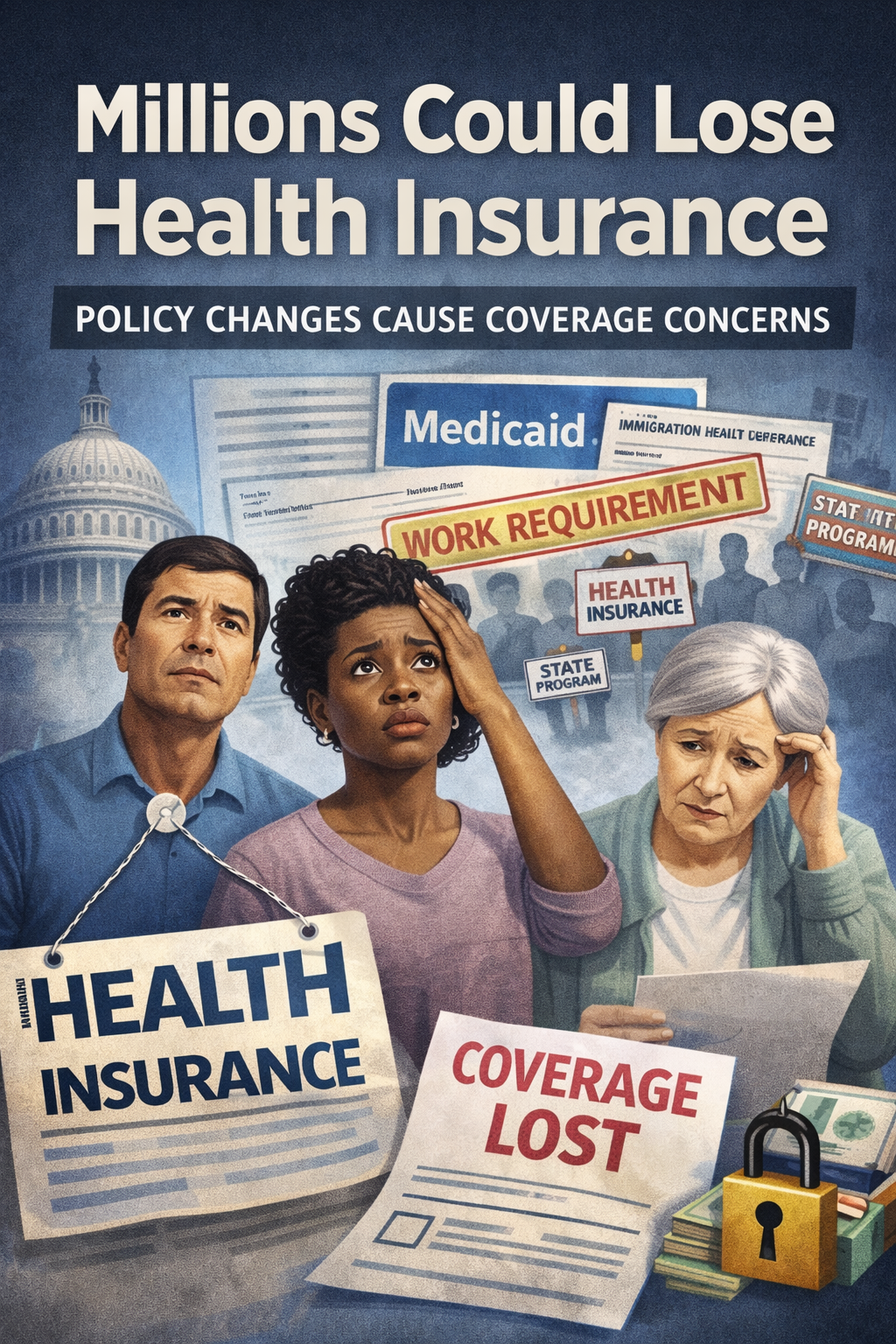
A recent policy proposal in the U.S. has raised concerns among health analysts and advocacy groups by showing that millions of Americans could lose health insurance coverage under certain changes to federal law. This issue revolves around proposed revisions to Medicaid eligibility and other healthcare policies included in a broad tax and budget bill.
Understanding the potential impacts — who could be affected, why the coverage risk exists, and what options people may have — is crucial for taxpayers, beneficiaries, and policymakers alike.
📊 What the Analysis Found: Key Numbers
| Metric | Estimate | Explanation |
|---|---|---|
| Americans at risk of losing insurance | ~10.9 million | Coverage loss projected by 2034 under the proposed policy scenario. |
| Undocumented residents affected | ~1.4 million | Individuals receiving coverage through state-funded programs. |
| Federal spending changes | ~$1.3 trillion reduction | Part of the projected cuts to federal health programs over a decade. |
| Tax cuts in proposal | ~$3.75 trillion | Size of tax reductions factored into the overall fiscal plan. |
| Net deficit impact | ~$2.4 trillion increase | Estimated effect on the federal deficit through 2034. |
These figures come from nonpartisan budget analysis of the broader tax and spending bill under discussion by lawmakers. They reflect long-term projections rather than immediate changes.
🧠 Why Coverage Loss Could Occur
Two main policy shifts are driving the projected loss of coverage:
1. Medicaid Work Requirements
Under the proposal, nondisabled adults on Medicaid might be required to complete a minimum number of hours of work, volunteering, or education monthly to remain eligible. Exemptions could apply for students, caregivers, and others.
Work requirements have been a point of debate for years, with supporters saying they encourage self-sufficiency and critics arguing they can create barriers to needed healthcare. Enforcing them effectively requires adequate administrative capacity and awareness among beneficiaries, which can be difficult in practice.
2. Changes to State-Funded Coverage for Undocumented Residents
Some adults without legal status currently receive health coverage through state-sponsored programs. The proposed changes could eliminate this coverage for many of them, reducing the number of insured people in that group.
❓ Common Questions Answered
Q: Is this coverage loss happening right away?
No. The projections are long-term estimates through 2034 based on how the policy could unfold if enacted and fully implemented. Immediate effects depend on what lawmakers ultimately pass and how state programs respond.
Q: Who are the people most at risk?
People most likely to lose coverage under the analyzed scenario include:
- Medicaid beneficiaries who cannot meet work-related eligibility rules
- Undocumented individuals relying on state health programs
- Low-income families in states with limited alternative coverage options
Q: What broader effects could this have?
Analysts warn that coverage loss could:
- Increase the number of uninsured Americans
- Lead some to delay care or incur medical debt
- Strain hospitals and clinics that provide uncompensated care
- Impact the overall healthcare economy as fewer patients have insurance support
Statewide effects can vary widely depending on how each state funds and administers its health programs.
📍 How This Relates to Medicaid and the ACA
Medicaid
Medicaid is a federal-state partnership that provides health coverage for low-income adults, children, pregnant women, and people with disabilities. Eligibility rules — including income limits and potential work requirements — vary by state. Changes to federal requirements can influence how states implement the program and who qualifies.
Affordable Care Act (ACA) Subsidies
The analysis also noted that changes in Marketplace subsidies for ACA plans — especially if enhanced tax credits expire — could further increase the number of uninsured people. Combined with Medicaid changes, this could amplify coverage losses for low-income residents.
🧭 What You Can Do: Practical Planning Tips
✅ 1. Check Your Current Coverage and Eligibility
If you or a family member receives Medicaid or Marketplace subsidies:
- Review current eligibility requirements in your state
- Stay informed about upcoming policy changes that could affect your status
- Contact your Medicaid office or health insurance Marketplace for updates
✅ 2. Explore Alternative Coverage Options
If changes reduce your eligibility:
- Check if you qualify for Marketplace plans
- Look into state-specific coverage programs
- Understand open enrollment periods and special enrollment pathways
✅ 3. Prepare for Transitional Periods
Lawmakers often phase in major changes. If coverage eligibility shifts, there may be grace periods or transition policies to ease the impact. Stay alert to official notices about deadlines and documentation requirements.
✅ 4. Use Local Health Resources
Community health centers and nonprofit clinics can provide primary care regardless of insurance. These clinics often offer services on a sliding fee scale and can help with preventive care when coverage is uncertain.
📌 Bottom Line
Projections show roughly 10.9 million Americans could lose health insurance coverage by 2034 under certain policy proposals that adjust Medicaid rules and state-sponsored programs. These estimates are based on long-term budget analysis and assume full implementation of the changes studied.
While these figures are not immediate, they highlight the importance of understanding federal health policy, staying informed about legislative changes, and planning ahead for shifts in coverage and eligibility.




Leave a Comment