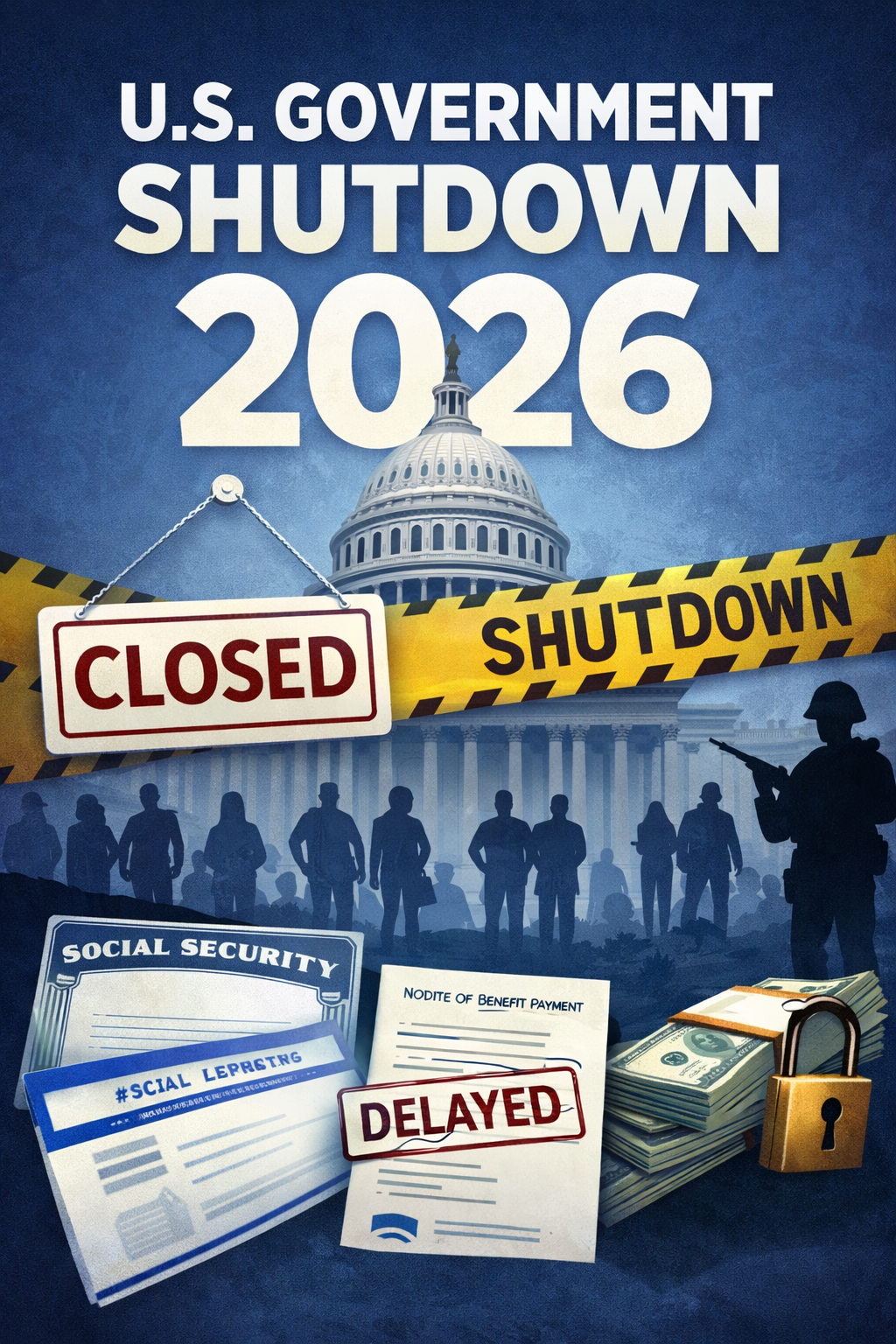
In start 2026, the United States experienced a short partial government shutdown after Congress failed to finalize federal funding on time. While the shutdown lasted only a few days, it raised concerns for federal employees, benefit recipients, and businesses that rely on government services.
This article explains what caused the shutdown, what continued, what stopped, and how Americans can plan for similar situations in the future, without exaggeration or misinformation.
What Happened During the 2026 Government Shutdown
| Key Detail | Information |
|---|---|
| Shutdown period | Late January to early February 2026 |
| Type | Partial government shutdown |
| Main cause | Disagreement in Congress over federal spending priorities, especially immigration and homeland security funding |
| Resolution | Congress passed a funding bill and the President signed it into law |
| Funding coverage | Most federal agencies funded through the end of the fiscal year; some departments received short-term funding extensions |
What Is a Government Shutdown?
A government shutdown occurs when Congress does not pass appropriations (funding) bills before the deadline. Federal law requires agencies without approved funding to halt non-essential operations.
During a shutdown:
- Essential services continue
- Non-essential services pause
- Some federal workers are required to work without immediate pay
- Others are temporarily furloughed
Shutdowns do not mean the entire government stops working.
Which Services Continued During the 2026 Shutdown?
| Service | Status |
|---|---|
| Social Security payments | Continued |
| Medicare and Medicaid | Continued |
| Military operations | Continued |
| Air traffic control | Continued |
| Border security | Continued |
| Federal courts (limited) | Continued |
These programs continued because they are funded separately or are considered essential for public safety and national security.
Which Services Were Affected or Delayed?
| Service | Impact |
|---|---|
| Federal office customer support | Limited or paused |
| Processing of new benefit claims | Slower |
| Permit and license approvals | Delayed |
| National parks staffing | Reduced |
| Research and grant programs | Temporarily paused |
The impact varied by agency and location.
Common Questions Answered
Does a government shutdown stop Social Security checks?
No. Social Security benefits continued to be paid during the 2026 shutdown. However, administrative services such as in-person help or new claim processing may have slowed.
Do federal employees get paid during a shutdown?
- Essential employees must work even if pay is delayed
- Non-essential employees may be furloughed
- Historically, Congress has approved back pay once the shutdown ends
Why do government shutdowns happen?
Shutdowns usually occur due to political disagreements over spending levels or policy conditions attached to funding bills. In 2026, disputes related to immigration enforcement and homeland security funding played a major role.
How long do shutdowns usually last?
Shutdowns can last from a few days to several weeks. The 2026 shutdown was relatively short compared to some previous shutdowns.
Practical Planning Advice for Individuals and Families
1. Prepare for Possible Income Delays
If you or someone in your household is a federal employee or contractor, it’s wise to:
- Keep an emergency fund
- Delay major expenses during funding uncertainty
- Track official pay guidance from your agency
2. Expect Slower Government Services
If you need permits, licenses, passports, or benefit changes:
- Submit applications early
- Expect delays during and shortly after a shutdown
- Save confirmation records and copies
3. Understand Which Benefits Are Safe
Programs like Social Security and Medicare typically continue, but customer service delays can still occur. Planning ahead reduces stress.
4. Follow Official Government Updates
Shutdown situations can change quickly. Rely on official announcements rather than rumors or social media speculation.
Why the 2026 Shutdown Matters
Although short, the 2026 shutdown highlighted:
- How funding disputes can disrupt daily government operations
- The importance of emergency financial planning
- The difference between essential and non-essential federal services
Understanding these dynamics helps individuals and businesses respond calmly and make informed decisions if future shutdowns occur.
Bottom Line
| Area | Impact in 2026 |
|---|---|
| Benefit payments | Continued |
| Federal employee pay | Delayed but expected to be restored |
| Government services | Mixed impact |
| Public disruption | Limited but noticeable |
The 2026 government shutdown was resolved quickly, but it served as a reminder that budget disagreements can still affect everyday services. Being informed and prepared is the best way to minimize disruption.








Leave a Comment